
.jpg)
5 Signs Your Commercial Building Needs an Electrical Upgrade
Whether you own a retail storefront, manage a multi-tenant office building, or run a restaurant, your electrical system is the backbone of everything you do. An aging or overloaded system doesn't just cause inconvenience — it can cost you customers, trigger code violations, and even spark a fire.
Here are five warning signs that it's time to call a licensed commercial electrician.
1. Circuit Breakers That Trip Constantly
The occasional tripped breaker is normal. But if your team is resetting breakers weekly — or you've had to redistribute equipment just to keep the lights on — your electrical panel is telling you something. Modern businesses draw far more power than buildings built 20 or 30 years ago were designed to handle. Computers, HVAC systems, kitchen equipment, and EV chargers all compete for capacity. Frequent tripping means you've already hit your limit.
2. Flickering or Dimming Lights
Lights that flicker when a piece of equipment kicks on are a classic sign of voltage fluctuations. In commercial settings, this often points to loose wiring, failing connections, or a panel that can't handle the demand spikes from heavy machinery or HVAC compressors. Beyond being distracting for employees and customers, voltage issues can silently damage sensitive equipment like computers and POS systems.
3. Outlets That Feel Warm or Look Discolored
Any outlet or switch plate that feels warm to the touch, shows scorch marks, or smells faintly of burning should be treated as an emergency. In a commercial environment where outlets are used heavily throughout the day, heat buildup at connections is a serious fire risk. Don't wait — this one warrants a same-day call.
4. Your Building Still Uses a Fuse Box
If your commercial property still relies on a fuse box rather than a modern circuit breaker panel, an upgrade isn't just convenient — it's critical. Fuse boxes can't safely handle today's electrical loads, and many insurers flag them as a liability. Upgrading to a modern panel improves safety, opens the door to energy management tools, and can lower your insurance premiums.
5. You're Planning a Renovation or Adding Equipment
Adding a commercial kitchen, expanding your office footprint, or installing EV charging stations all require a professional load assessment before you begin. Running new equipment on circuits that weren't designed for it is a code violation and a safety hazard. The right time to plan your electrical upgrade is before you break ground — not after.
A Closer Look: Commercial Panel Upgrades
If any of the signs above hit close to home, a panel upgrade is likely in your future. Here's what that actually means, what it costs, and what to expect from the process.
What Is a Commercial Electrical Panel?
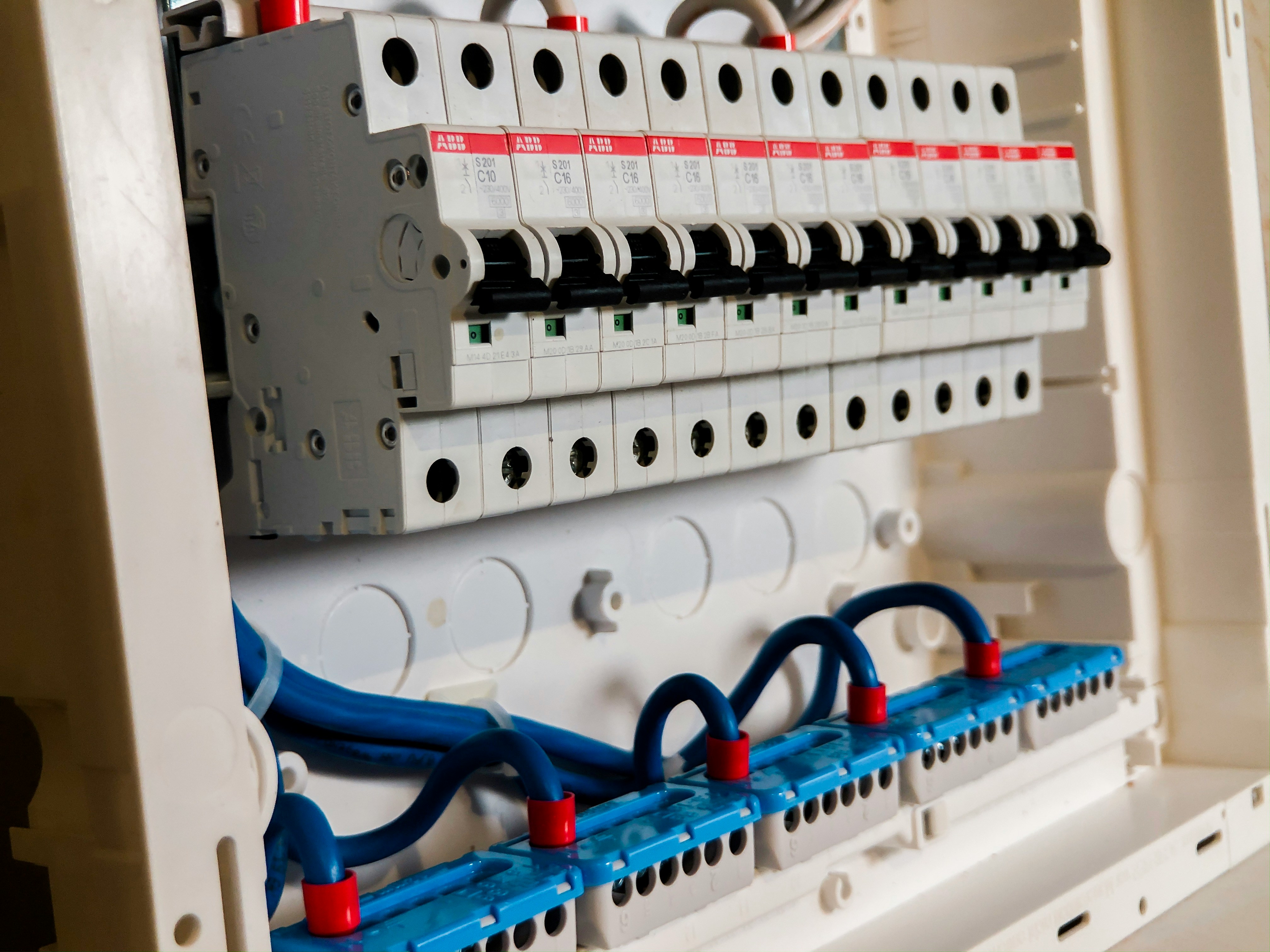
Your electrical panel — also called a load center or distribution board — is the hub that receives power from the utility and distributes it across every circuit in your building. Each breaker protects one circuit; if that circuit draws more current than it's rated for, the breaker trips and cuts power before wiring overheats.
Commercial panels are rated by amperage (the total current capacity) and voltage. A small retail space might run on a 200-amp, single-phase service. A mid-size office building or restaurant typically needs 400 to 800 amps. Industrial facilities or large multi-tenant buildings may require 1,000 amps or more, often with three-phase power to run heavy motors and HVAC systems efficiently.
The problem most businesses face isn't a broken panel — it's an undersized one. A building wired in the 1980s for a few fluorescent lights and some wall outlets was never designed for today's IT infrastructure, commercial kitchen loads, or EV charging.
Signs Your Panel Specifically Needs Upgrading
Beyond the general warning signs above, watch for these panel-specific red flags:
Breakers that won't reset or hold. A breaker that trips immediately after being reset — or that feels loose and won't click firmly into position — is failing. In a commercial panel, a failing breaker means a circuit that's either unprotected or permanently dead.
A panel that's physically full. If your electrician has been adding tandem breakers (two breakers squeezed into one slot) just to find room, you've outgrown your panel. Tandem breakers aren't inherently unsafe, but relying on them as a long-term solution limits future flexibility and can push a panel beyond its rated capacity.
Rust, corrosion, or evidence of moisture. Commercial panels in basements, utility rooms, or exterior locations are vulnerable to moisture intrusion. Corrosion on bus bars or breaker terminals increases resistance, generates heat, and creates fire risk.
No main disconnect or an undersized one. Code requires a means to shut off all power to the building from a single point. Older panels sometimes have multiple disconnects — a workaround that's no longer code-compliant and creates confusion in an emergency.
What Does a Commercial Panel Upgrade Involve?
A panel upgrade isn't just swapping one box for another. Here's a realistic overview of the process:
Load calculation. Before any equipment is specified, a licensed electrician performs a load calculation — a formal assessment of every circuit in the building, the connected equipment, demand factors, and projected growth. This determines what size service you actually need, not just what you currently have.
Utility coordination. Upgrading from 200 to 400 amps (or higher) usually means your utility company needs to upgrade the transformer or service drop feeding your building. Your electrician coordinates this directly with the utility, but it adds lead time — often two to six weeks depending on the provider and the scope of work.
Permitting. All commercial panel work requires a permit from your local authority having jurisdiction (AHJ). A reputable contractor pulls the permit before work begins, and the finished installation is inspected before power is restored. Don't hire anyone who suggests skipping this step.
The installation itself. On the day of the upgrade, power to the building is shut off while the old panel is de-energized and removed, new equipment is mounted and wired, circuits are reconnected and labeled, and the new panel is inspected and energized. For most commercial upgrades, this takes one to two days. Larger services or three-phase conversions may take longer.
Panel labeling and documentation. A quality electrician delivers a fully labeled panel directory — every circuit identified clearly — along with as-built documentation. This matters more than most business owners realize; accurate labeling saves hours of troubleshooting during future service calls.
How Much Does a Commercial Panel Upgrade Cost?
Costs vary widely based on service size, building type, local labor rates, and whether utility work is required. As a general range:
A 200-amp to 400-amp upgrade for a small commercial property typically runs $3,000 to $6,000, including materials, labor, and permits. Larger services (600 to 800 amps) often fall in the $8,000 to $15,000 range. Three-phase service installations or conversions are priced individually based on utility requirements and the complexity of the existing infrastructure.
These figures don't account for any branch circuit work, subpanel installations, or other upgrades that may be identified during the load calculation. A thorough electrician will give you a clear scope before work begins so there are no surprises.
Is It Worth It?
For most businesses, the answer is yes — often decisively. Consider what an underpowered electrical system actually costs you: equipment downtime, shortened lifespans on computers and motors due to voltage instability, the inability to add new circuits or equipment without a workaround, potential insurance rate increases, and the liability exposure of a system that's quietly overloaded.
A properly sized panel is infrastructure. It's the foundation everything else in your building runs on. Getting it right now — rather than waiting for a failure — is almost always the less expensive path.
Lynn Electric's commercial team handles panel upgrades from initial load assessment through permit closeout. We work around your schedule to minimize downtime and deliver clean, fully documented installations. Contact us to schedule a free walk-through and estimate.
.jpg)

Need Help or have a Question?
Fill out the form and a service member will be in contact with you shortly.


